Flash Photonic Heating Reported to Boost Solar Material Performance
News at Glance Report cites up to 50x performance increase in certain solar materials after millisecond photonic processing. Flash photonic heating uses ultrafast light pulses to heat films briefly, enabling rapid material transformation. Industry analysts call for independent testing and pilot demonstrations before commercial rollout. Millisecond pulses reported to reduce thermal processing time for solar […]

Suraj Kadam
August 22, 2026•7 min read
Advertisement
Table of Contents
News at Glance
- Report cites up to 50x performance increase in certain solar materials after millisecond photonic processing.
- Flash photonic heating uses ultrafast light pulses to heat films briefly, enabling rapid material transformation.
- Industry analysts call for independent testing and pilot demonstrations before commercial rollout.
Millisecond pulses reported to reduce thermal processing time for solar films
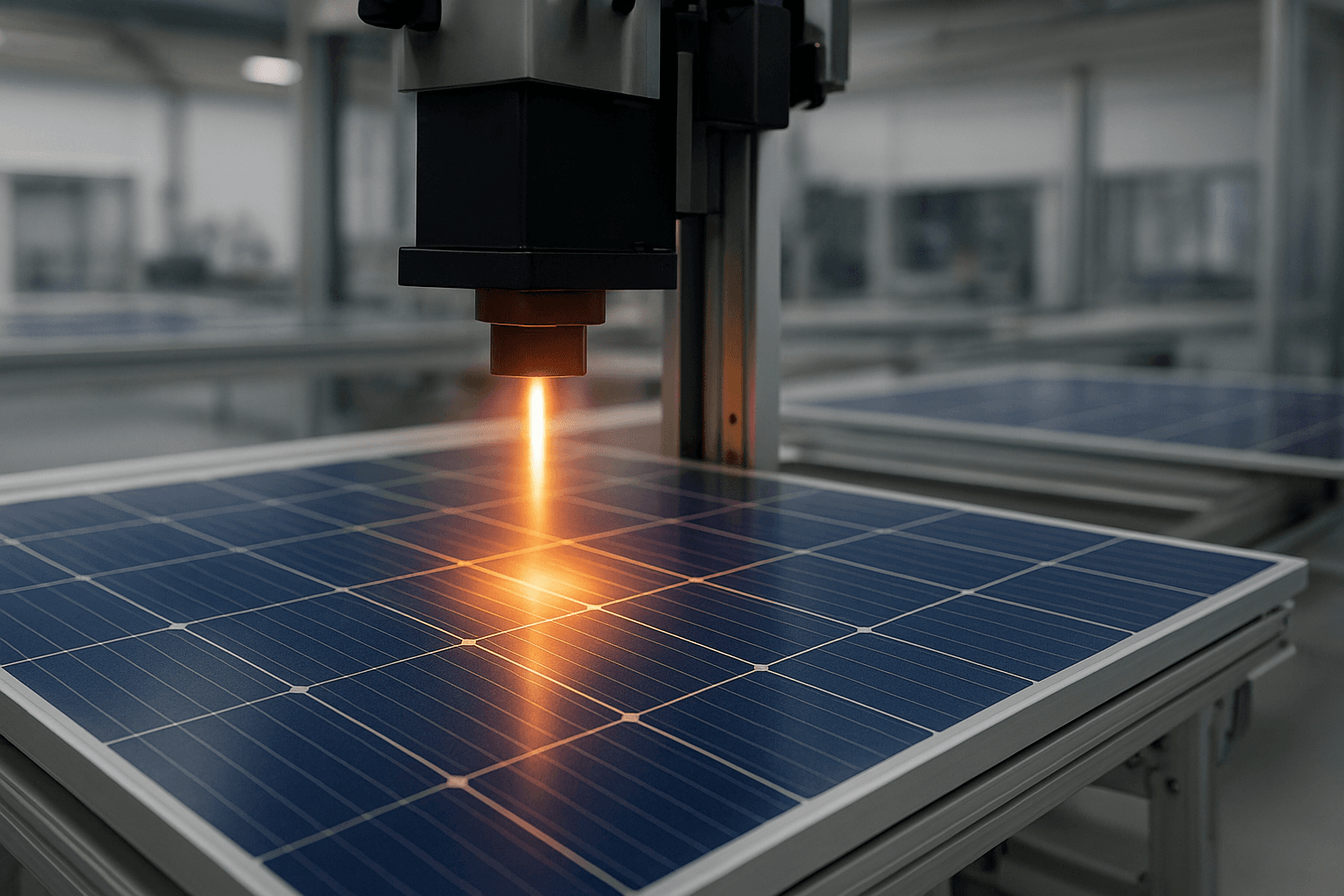
Flash photonic heating, a technique that applies intense light pulses on millisecond timescales, has been reported to deliver large performance improvements in solar materials, according to a recent account. The claim is that brief, controlled photonic bursts can alter material properties far faster than conventional thermal annealing.
Technically, the method relies on rapid surface heating from high-intensity light, followed by fast cooling, which can change crystallinity and electrical behaviour without exposing the whole substrate to prolonged heat. Proponents say this reduces thermal budgets and shortens processing times in laboratory demonstrations.
Potential benefits for photovoltaic manufacturing include higher throughput and lower energy consumption during production, if results translate from lab samples to full-scale processes. Faster processing could also enable new substrate choices that are incompatible with long furnace cycles.
However, the available report does not include independent peer-reviewed validation, long-term stability data or detailed manufacturing cost analysis. Analysts caution that exceptional laboratory gains often face challenges in reproducibility and scale-up in industrial environments.
Key questions for industry uptake include uniformity across large-area panels, integration with existing production lines and equipment costs. Pilot projects and third-party testing will be critical to determine whether the technique can meet reliability standards required for commercial solar modules.
For now, flash photonic heating is a promising materials-processing approach that warrants further study. Researchers and manufacturers will likely pursue systematic trials to verify claims, quantify lifetime performance and assess economic viability before broader adoption.
FAQs
What is flash photonic heating?
It is a process that uses intense, short-duration light pulses to heat a material’s surface rapidly, inducing changes in structure or conductivity without prolonged bulk heating.
How does it affect solar materials?
Rapid heating and cooling can modify crystallinity and defect states, potentially improving charge transport and optical properties, according to the report.
Is the reported 50x improvement verified?
The claim appears in a recent report; independent peer-reviewed validation and reproducibility tests are still needed to confirm such gains broadly.
Can it be scaled to industrial production?
Scaling will require demonstration of uniform processing on large-area substrates, cost-effective equipment and proof of long-term module stability.
What are the main challenges?
Challenges include ensuring uniformity, integrating with current lines, managing capital costs and proving long-term reliability of treated materials.
When might this impact solar costs?
Timeline depends on successful pilot projects and commercialisation; without independent demonstrations, any impact on costs remains speculative.
Advertisement
Written by
Suraj Kadam
Suraj Kadam is the Chief Editor at CleanTech Journal, where he leads coverage of the renewable energy sector with a sharp focus on solar power and emerging clean technologies. With over 8 years of experience in energy journalism, Suraj has built a reputation for translating complex industry developments into clear, insightful stories for policymakers, investors, and everyday readers.